
Atlanta BeltLine Investment Guide: Where the Trail Is Still Moving Prices in 2026
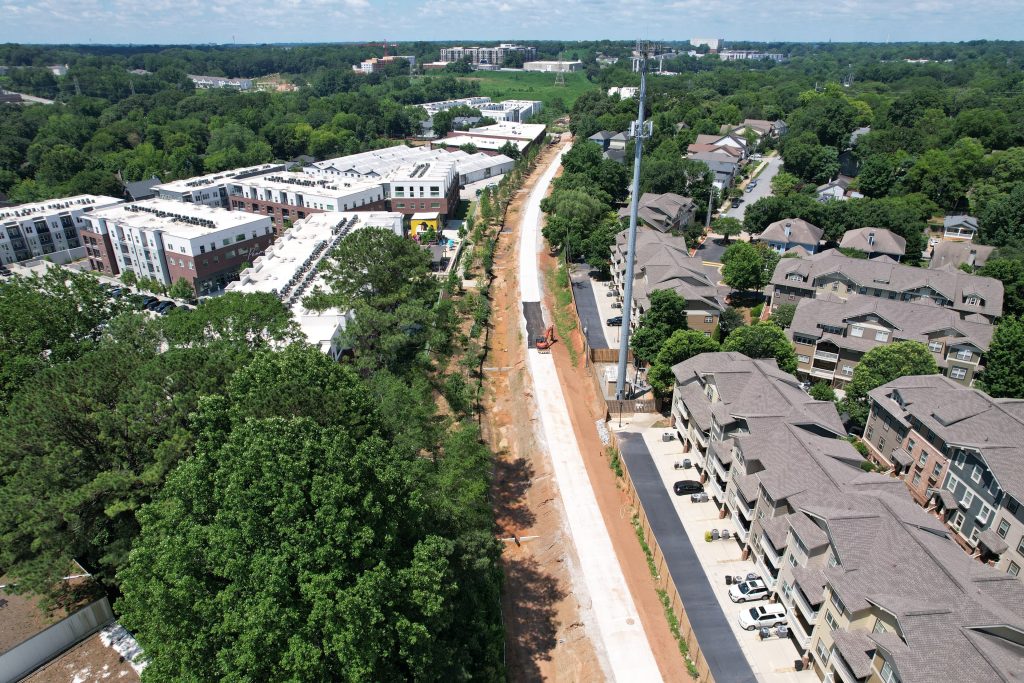
The Atlanta BeltLine remains a major residential real estate investment corridor in 2026. Pricing, rental demand, and future appreciation potential differ substantially between the established Eastside Trail and the transitioning Westside and Southside corridors.
Inman Park and Old Fourth Ward provide stronger current demand and resale liquidity. West End, Adair Park, and Peoplestown provide lower acquisition costs and more potential appreciation runway. The additional upside is accompanied by greater pricing volatility, construction risk, and operating uncertainty.
This Neighborhood & Suburb Guide reviews current pricing, rental demand, cap rate expectations, trail completion status, taxes, and underwriting requirements for investors evaluating an investment property for sale near the Atlanta BeltLine.
Atlanta BeltLine Investment Snapshot
| Area | Approximate 2026 pricing | Investment profile |
|---|---|---|
| Inman Park | Approximately $620,000 median | Mature, appreciation-oriented, lower yield |
| Old Fourth Ward | Approximately $377,000 listing example at $360 per square foot | Premium location with property-specific value differences |
| West End | Approximately $300,000 to $390,000 median range | Transitional, higher yield potential |
| Adair Park | Approximately $250,000 to $390,000 median range | Value-add and growth-oriented |
| Peoplestown | Approximately $300,000 to $390,000 median range for selected housing stock | Higher volatility and development exposure |
Data varies by source, housing type, transaction period, and geographic boundary. Recent neighborhood data can be reviewed through Redfin Inman Park, Redfin Old Fourth Ward, Redfin West End, Redfin Adair Park, and Redfin Peoplestown.
Eastside Trail: Inman Park and Old Fourth Ward
The Eastside Trail is the most mature and established BeltLine investment area. Inman Park has been reported at approximately a $620,000 median with 7.2 percent year-over-year appreciation in recent market data. The neighborhood benefits from direct trail access, established retail, employment proximity, and strong buyer recognition.
Inman Park is generally an appreciation-oriented market. Acquisition costs are high, inventory is limited, and competition remains significant for renovated homes, townhomes, and well-located condominiums. Rental demand is supported by professionals seeking access to Midtown, Downtown, Ponce City Market, Krog Street Market, and the Eastside Trail.
Old Fourth Ward has a broader housing mix that includes condominiums, townhomes, and single-family properties. A $377,000 listing at $360 per square foot should not be classified as a discount without reviewing the property type, size, condition, homeowners association expenses, and exact distance from the trail.
The price may be competitive for a smaller condominium or townhome. The price per square foot may still be high for an asset with substantial repair requirements or elevated monthly fees. Comparable sales should be matched by property type and building quality.
Eastside properties generally operate as core or core-plus investments. The primary return objective is long-term appreciation and stable occupancy. Income yields are usually lower because purchase prices reflect existing trail access and neighborhood maturity.
Westside and Southside Trail: Emerging Investment Corridors
West End, Adair Park, and Peoplestown have lower entry prices than Inman Park and Old Fourth Ward. These neighborhoods also have greater exposure to trail completion, new housing, public investment, and changing tenant demand.
West End has recorded substantial long-term price growth. Recent data also show periods of year-over-year price declines and longer marketing periods. This combination indicates that the neighborhood has appreciated significantly but remains sensitive to financing costs, inventory, and buyer expectations.
Adair Park provides a value-add environment with older housing stock, lower purchase prices, and proximity to the Southside Trail. Renovated single-family rentals and small multifamily properties can support stronger income returns than Eastside properties. Construction quality, tenant screening, insurance, and property management require close review.
Peoplestown is a mixed-income and developing market near downtown and the Southside Trail. The neighborhood includes older homes, new construction, affordable housing, and market-rate rental projects. Data is less consistent because the number of sales can be limited and property types vary. Conservative valuation assumptions are required.
The primary investment thesis in these corridors is not based only on current pricing. It is based on the relationship between current basis, rental income, infrastructure completion, and future resale demand.
Rental Demand and Cap Rate Expectations
Rental demand remains strongest in locations with direct trail access, proximity to employment, walkable retail, public transportation, and new residential amenities.
Eastside demand is established. Inman Park and Old Fourth Ward attract higher-income renters and residents seeking urban access. Rents can support strong occupancy, but purchase prices have already incorporated much of the BeltLine premium.
Westside and Southside demand is developing. West End, Adair Park, and Peoplestown benefit from lower rents relative to Eastside neighborhoods and continued housing investment. However, metro Atlanta apartment supply has increased, and rent growth should not be assumed to continue at prior rates.
For preliminary underwriting, the following cap rate ranges can be used:
- Premium intown areas, including Inman Park and Old Fourth Ward: Approximately 4 to 6 percent.
- Transitioning Westside and Southside areas, including West End, Adair Park, and Peoplestown: Approximately 6 to 9 percent.
These are screening ranges, not guaranteed market results. The calculation should use stabilized net operating income divided by total acquisition cost. Total acquisition cost should include purchase price, closing costs, immediate repairs, financing fees, and required reserves.
Gross rent is not sufficient. The operating model should include vacancy, management, repairs, capital expenditures, insurance, taxes, utilities, leasing costs, and homeowners association dues where applicable.
Trail Completion Status and Appreciation Runway
Trail completion is a material variable in BeltLine investment analysis.
The Eastside Trail is an established asset. Its direct value effect has already been reflected in many nearby property prices. Future appreciation remains possible, but the trail itself provides less unpriced upside than it did during earlier development stages.
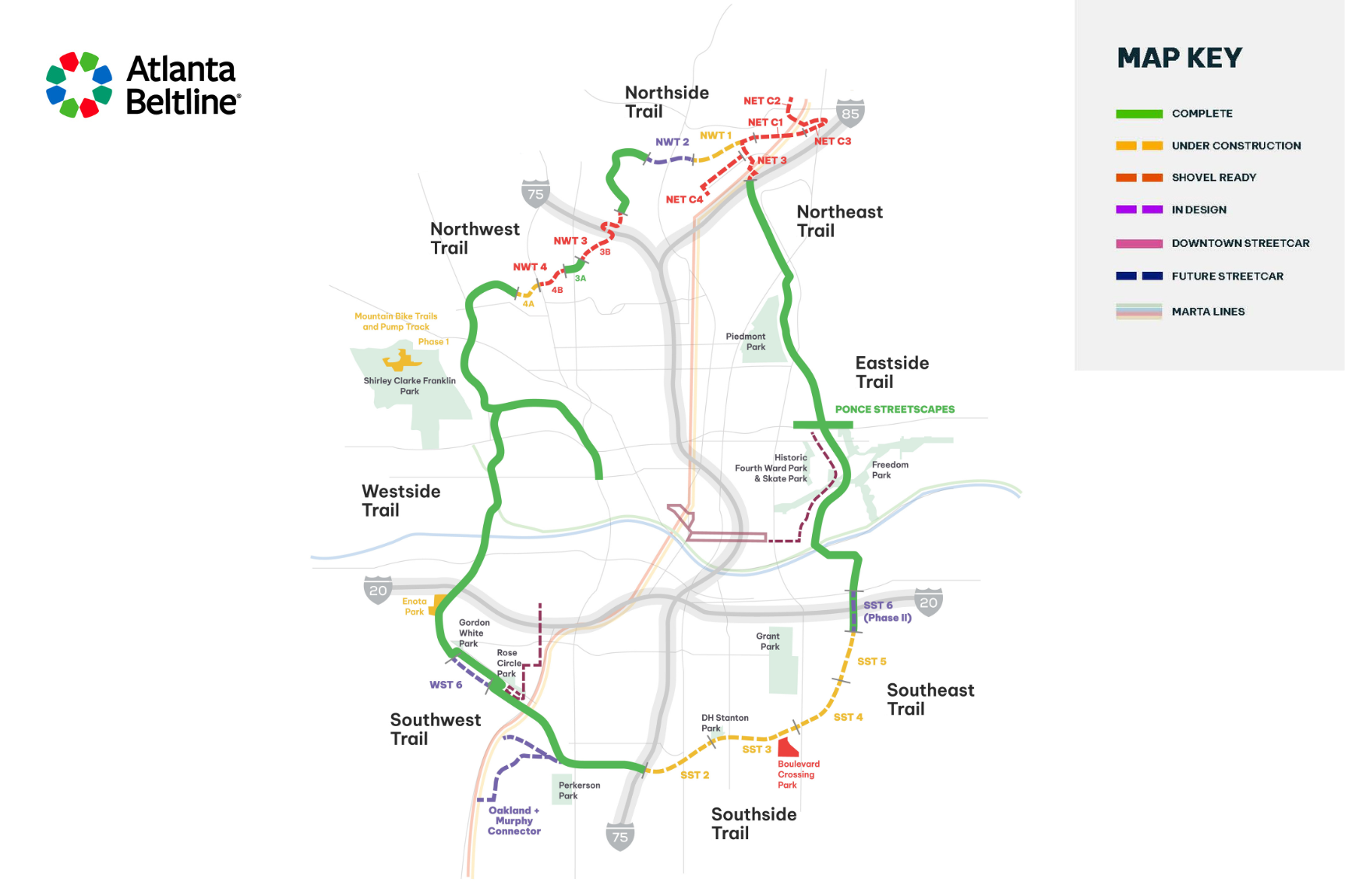
The Southeast Trail segment from Boulevard to Glenwood Avenue opened in April 2026. The 1.2-mile addition completed the 2.5-mile connection from the Krog Street Tunnel to Boulevard Southeast. The official Atlanta BeltLine announcement identifies connections to Glenwood Park, Grant Park, Ormewood Park, and Boulevard Heights.
Southside Trail Segments 2 and 3 extend approximately 1.9 miles from west of Interstate 75 and Interstate 85 to Boulevard. These segments opened in 2026 and connected the Eastside and Westside portions of the system. The official Atlanta BeltLine project information provides current construction and access details.
By mid-2026, approximately 16.7 miles of continuous mainline trail had been delivered, along with approximately 1.6 miles of connector trail. Westside Trail Segment 6 remained an interim sidewalk connection during 2026, with permanent BeltLine-standard construction scheduled after the FIFA events. Details are available in the Atlanta BeltLine construction update.
This creates more appreciation runway in West End, Adair Park, and Peoplestown than in Inman Park. Completion does not guarantee price appreciation. It increases access and market visibility, while actual results remain dependent on crime conditions, retail development, housing supply, public investment, and broader economic conditions.
Property Tax Implications
Georgia property taxes are based on assessed value and applicable county, city, and school millage rates. Residential property is generally assessed at 40 percent of fair market value under Georgia law. The Georgia Department of Revenue property tax guidance should be reviewed with the applicable local tax authority.
Investment properties generally do not receive the same homestead exemptions available to owner-occupants. A rental property can therefore have a higher effective tax burden than a comparable owner-occupied property.
Investors should verify:
- Current assessed value.
- Fulton County millage rate.
- City of Atlanta millage rate.
- School tax obligations.
- Prior assessment changes.
- Pending appeals or reassessments.
- Special assessments or municipal charges.
Tax expenses should be increased in the pro forma to account for future assessment growth. This is particularly important in neighborhoods experiencing rapid redevelopment.
Underwriting Notes for BeltLine Investment Properties
Each property should be analyzed independently. The following process is recommended:
-
Confirm the micro-location.
Measure walking distance to the completed trail, trail access points, transit, retail, and major roads. A property marketed as BeltLine-adjacent may not have direct or convenient access. -
Separate completed infrastructure from planned infrastructure.
Current trail access should be valued differently from a future segment. Project schedules can change, and temporary connections may not provide the same market benefit as permanent construction. -
Use conservative rent assumptions.
Compare at least three current rental listings and recent leased comparables. Adjust for parking, renovation quality, square footage, outdoor space, pet policies, and amenities. -
Review physical condition.
Older Westside and Southside properties may require roofing, drainage, electrical, plumbing, HVAC, and structural work. A contractor scope and contingency reserve should be completed before closing. -
Review condominium and townhome documents.
Old Fourth Ward and other Eastside areas contain substantial condominium and townhome inventory. Review association budgets, reserves, rental caps, insurance, litigation, and special assessments. -
Stress-test the exit.
Model flat rents, higher vacancy, increased insurance, higher taxes, repair overruns, and a sale price below the projected value. The acquisition should remain viable under conservative assumptions.
GPC’s investment process uses four stages: find, fund, fix, and future. This structure can be applied to both rental acquisitions and resale projects.
Investment Strategy by Neighborhood
Inman Park is appropriate for investors prioritizing established demand, resale liquidity, and long-term appreciation. Lower cap rates should be expected.
Old Fourth Ward requires property-level analysis. A $377,000 acquisition at $360 per square foot may be viable if rental income, association costs, condition, and location support the basis.
West End and Adair Park are suitable for investors seeking higher income potential and value-add opportunities. Greater volatility and renovation risk should be included in the required return.
Peoplestown offers Southside Trail exposure and long-term redevelopment potential. The mixed-income environment requires detailed tenant, rent, zoning, and resale analysis.
The 2026 Atlanta market remains selective. Current Atlanta market updates indicate increased inventory and improved negotiation conditions. A BeltLine investment should be based on verified income, complete expenses, confirmed taxes, and a defined exit plan.
For property-specific analysis, acquisition support, leasing, or management services, contact GPC Real Estate.
