
Wholesale Real Estate 101: How Assignment Deals Actually Work Under Georgia Law in 2026
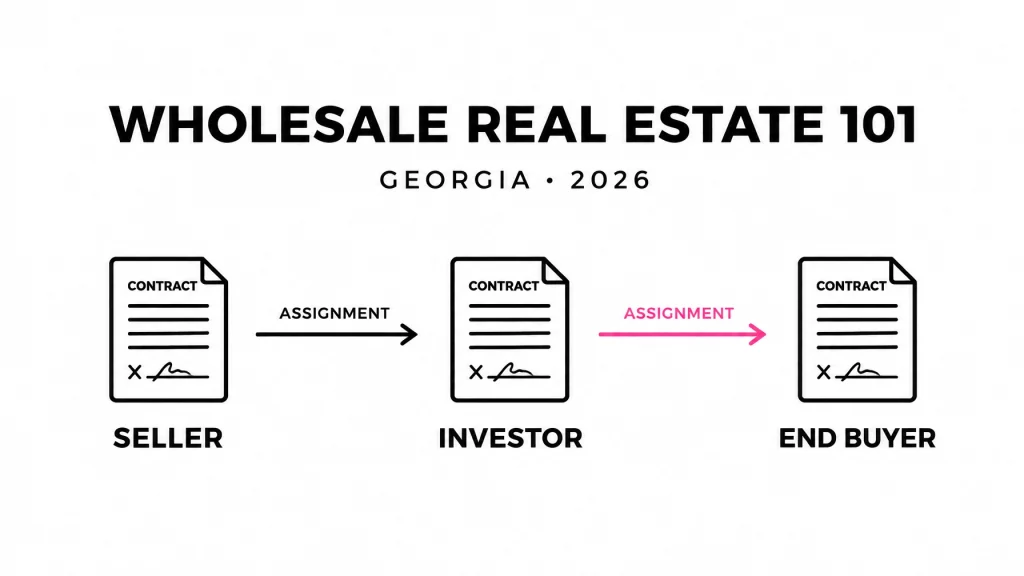
Wholesale real estate involves contracting to buy a property and then either assigning the purchase contract to another buyer or completing two separate closings. The wholesaler generally seeks compensation for the contract position, not for acting as the seller’s real estate agent.
The legal details matter. Georgia has no separate “wholesaler license,” but that does not create a blanket exemption from real estate licensing laws. Also, a frequently repeated reference to a “2024 Georgia wholesaling law, HB 1019” is incorrect. HB 1019 concerned the homestead exemption. It did not create wholesale disclosure or cancellation rights. The relevant rules include Georgia’s broker licensing statutes and separate requirements for certain unsolicited written real estate solicitations.
This guide explains the process for Atlanta investors and identifies where legal review is appropriate.
What Is Wholesale Real Estate?
A wholesaler enters a purchase contract with a property owner and later transfers the wholesaler’s contractual rights to an end buyer. The original seller remains the owner until the property closes.
Two transaction structures are common:
- Assignment: The wholesaler assigns contractual rights to the end buyer. The end buyer purchases the property from the seller under the original contract.
- Double closing: The wholesaler first buys the property from the seller and then resells it to the end buyer in a separate transaction.
An assignment does not itself transfer ownership of the property. It transfers the contract position, subject to the contract’s terms and applicable law. A double closing involves two property transfers and generally requires separate closing arrangements and sufficient funding.
How a Georgia Assignment Deal Works

1. Find and evaluate a property
Atlanta investors may identify potential off-market opportunities through public records, owner outreach, referrals, property managers, investor networks, and licensed real estate agents. Public records can help identify ownership, tax status, liens, and probate matters. They do not prove that an owner is ready to sell or that a property is a good investment.
Underwrite the property using comparable sales, verified rent assumptions, repair estimates, taxes, insurance, financing, closing expenses, and the intended exit strategy. A low asking price is not necessarily a discount if the repair scope or resale assumptions are wrong.
2. Sign a purchase contract as a principal
The investor should enter into a written purchase agreement that accurately identifies the buyer and states the agreed terms. Review the assignment provisions before signing. The contract may prohibit assignment, require seller consent, or otherwise limit transfer of the buyer’s rights.
An “and/or assigns” phrase should not be treated as a substitute for reviewing the full contract. Assignment rights, notice requirements, earnest money, due diligence dates, default remedies, and closing deadlines should be confirmed in writing.
3. Disclose the structure and document the assignment
The contract and transaction documents should make clear who holds the purchase contract and whether the buyer intends to assign it. An assignment agreement should identify the original contract, the assignor and assignee, the assignment consideration, and the parties’ responsibilities.
Georgia’s cited statutes do not establish a general wholesaler-specific equitable-interest disclosure or cancellation right. Clear written disclosure remains a prudent transaction practice. The wholesaler should not suggest that they own the property when they hold only contractual rights.
4. Close through the agreed structure
In an assignment, the seller and end buyer typically close under the original purchase agreement, with the assignment reflected in the closing documents. In a double closing, the wholesaler buys from the seller and resells to the end buyer in separate transactions.
Georgia real estate closings are handled through a Georgia attorney. The closing attorney should review the contract structure, title, funding, assignment documents, and required disclosures before closing.
Georgia Real Estate Law: HB 1019 Is Not the Wholesaling Rule

HB 1019 did not enact a Georgia wholesaling law. The Georgia General Assembly’s HB 1019 record concerns a homestead exemption measure. It did not amend O.C.G.A. § 43-40 to require wholesaler licensing, equitable-interest disclosures, or a special cancellation right.
A different law, SB 90, created O.C.G.A. § 10-1-393.19, which addresses certain unsolicited written inquiries and mailings about buying real property or providing services relating to a real estate sale. The 2024 HB 1292 added notices for monetary offers and additional penalties.
For covered mailings from a person or entity not licensed or regulated under the chapters specified in the statute, required notices include a statement that the communication is a solicitation and that the recipient has no obligation to respond. A monetary offer also requires a notice that it may not be fair market value. If the offer is below the previous year’s county-assessed value, another notice is required. The statute also specifies placement, size, and appearance requirements. It provides penalties for violations. See O.C.G.A. § 10-1-393.19.
This law concerns specified unsolicited written communications. It is not a universal disclosure rule for every wholesale transaction, and it does not create a general right to cancel an assignment contract.
When does a wholesaler need a real estate license?
Under O.C.G.A. § 43-40-1, broker activity can include negotiating or procuring prospects for another person’s real estate transaction for compensation, as well as certain advertising or consulting activities. O.C.G.A. § 43-40-30 addresses acting without a required license.
The owner and prospective-purchaser exceptions in O.C.G.A. § 43-40-29 may be relevant when an investor acts for their own account. However, the statute does not provide a blanket “wholesaler” safe harbor. The substance of the conduct matters. Marketing another person’s property, procuring a buyer for the seller, or negotiating for another in exchange for compensation may raise licensing concerns. The label “assignment” does not settle that question.
A Georgia real estate attorney should review the intended business model, marketing, contracts, and compensation arrangement. A solicitation exemption should not be assumed simply because a person believes they qualify for a licensing exception.
Finding Discounted Off-Market Deals in Atlanta
Off-market sourcing is a method of finding potential sellers, not proof that a property is underpriced. Atlanta investors can use county property and tax records, probate filings, public notices, direct outreach, referrals, and local agent relationships to identify possible leads. Each lead requires independent verification of ownership, authority to sell, title status, property condition, and investment value.
For direct mail, the applicable state solicitation requirements should be checked before a campaign begins. For a property already listed on the MLS, the offer can be compared with the asking price, recent comparable sales, days on market, condition, and any disclosed issues. MLS availability does not automatically make a property a poor investment. It does make the asking price and competing interest easier to assess.
Local pricing, rent, and inventory conditions vary by neighborhood and property type. Review current Atlanta market updates rather than applying one metro-wide assumption to every deal.
Common Mistakes and Ethical Practices

Common transaction problems include signing a contract that restricts assignment, missing a due diligence deadline, relying on an unverified repair estimate, failing to confirm title or seller authority, and marketing the property as owned when only contract rights are held. An end buyer who fails to close can also leave the wholesaler responsible for obligations under the original contract.
Before marketing a contract position, confirm assignment terms, disclose the wholesaler’s role accurately, verify the end buyer’s funds and timing, and coordinate with the closing attorney. Do not use misleading claims about property value or imply that a seller must accept an offer. These steps support transparency and reduce preventable disputes.
When Should a Buy-and-Hold Investor Consider a Wholesale Deal?
A wholesale deal may suit a buy-and-hold investor when the property’s condition, location, rent potential, and total acquisition cost align with the investor’s plan. The assignment fee should be included in the buyer’s total basis alongside repairs, closing expenses, financing, taxes, insurance, vacancy, maintenance, and management.
Compare the wholesale opportunity with MLS listings using the same underwriting standards. The wholesale route may provide access to a property not publicly listed, but it can involve limited inspection time, an assignment fee, uncertain title or repair conditions, and a short closing schedule. An MLS property may offer more information or a different negotiation structure. Neither source is automatically superior.
A disciplined investor buys the deal that meets the investment criteria, not the deal with the most attractive label. GPC’s investment process and investor education resources provide additional guidance on property review and acquisition planning.
This article provides general investor education and is not legal, tax, brokerage, or financial advice. Georgia statutes, contracts, and transaction structures should be reviewed with a Georgia real estate attorney.
